Research-based worksheets for introductory physics that help students
-
build on their own good ideas as “seeds of science”,
-
engage in sense-making about physics, and
-
develop and apply models of key physics concepts.
Open-access and editable so you can customize for your classroom and students.
Get the ACORN Physics Tutorials
View and download FREE worksheets, discussion questions, and instructor guides for these topics in introductory physics:
 Circuits Tutorial
 Momentum Tutorial
 Waves Tutorial
 Heat & Temp. Tutorial
Design and structure of ACORN Physics Tutorials
ACORN Physics Tutorials are worksheets that students work on collaboratively in groups of 3-4 with support from instructors and/or near-peer facilitators. Each takes 50-90 minutes for students to complete. Three types of questions guide students to build their own models for common physics phenomena:
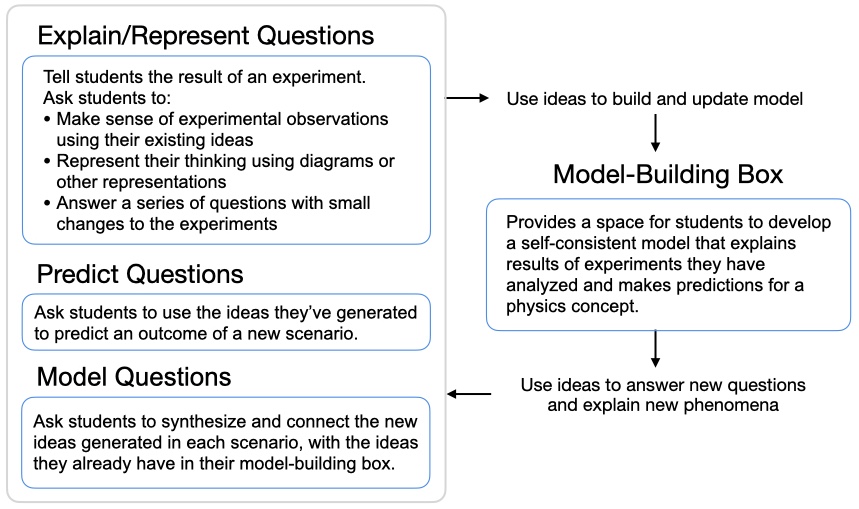
To learn more, see instructor resources.
People
Current Team Members
 |
Amy Robertson (she/her, PI, Seattle Pacific University) is a Research Professor and physics education researcher with a strong interest in cultivating liberatory classroom and professional spaces. In her work, Amy roots herself in a variety of methodological tools, disciplinary and interdisciplinary collaborations, and her lived experience as a disabled and chronically ill physicist. Her research focuses on university students’ conceptual resources for learning physics and how frameworks from equity and justice can help physicists become more critically conscious. She is a proud puppy mama, a disabled hiker, and an avid crafter. |
 |
Paula Heron (she/her, PI, University of Washington) is a Professor of Physics at the University of Washington. She has been engaged in physics education research with a focus on improving student conceptual understanding and reasoning ability for nearly 30 years. She is involved in a number of international organizations and collaborations in PER and has been recognized by awards from the American Physical Society and the American Association of Physics Teachers. Dr. Heron is an Associate Editor of Physical Review Physics Education Research. |
 |
Rachel Scherr (she/her, co-PI, University of Washington) is an Assistant Professor of Physics at the University of Washington Bothell. A longtime physics education researcher, she has a special interest in educator development, including physics faculty, K-12 teachers, graduate teaching assistants, and undergraduate learning assistants. Dr. Scherr is the producer of Periscope Video Lessons. |
 |
Raphael Mondesir (he/his, co-PI, Seattle Pacific University) is an Assistant Professor of Sociology at Seattle Pacific University. As a quantitative sociologist, Dr. Mondesir utilizes a variety of methods to study the intersection of community development, civic participation, and religious pluralism in the Global South. His special interest in civic cultures and social networks often inform his teaching and how he builds relationships with his students. Dr. Mondesir spends his weekends playing soccer or hiking. |
 |
Lisa Goodhew (she/her) is an Assistant Professor of Physics at Seattle Pacific University. Her research focuses on university students’ conceptual resources for understanding physics and supporting instructors in effectively leveraging these resources. Dr. Goodhew’s favorite part of her work is getting to know and learn with students in and out of the physics classroom, and she is excited by the ways this research makes her a better teacher. |
 |
Lauren Bauman (she/her) is a research coordinator at the University of Washington Seattle. She first became interested in physics education research while learning physics as an undergraduate and is particularly interested in effectively creating empowering, equitable, and supportive educational spaces that authentically center students' ideas. Most of her research focuses on analyzing written data to identify students' conceptual resources. |
 |
Anne Alesandrini (they/them and she/her) is a current graduate student with the Physics Education Group at the University of Washington and a former public high school teacher. Their research interests include student explanations and educator development, and they spend a lot of time thinking about the interactions between education, science, and society. They find joy wandering around outside with their kids looking at plants. |
 |
Al Snow (they/them) is a graduate student in Physics at the University of Washington. They are currently working on classroom discussion video analysis and pretest response analysis. Al enjoys reading and writing, as well as listening to and performing music. |
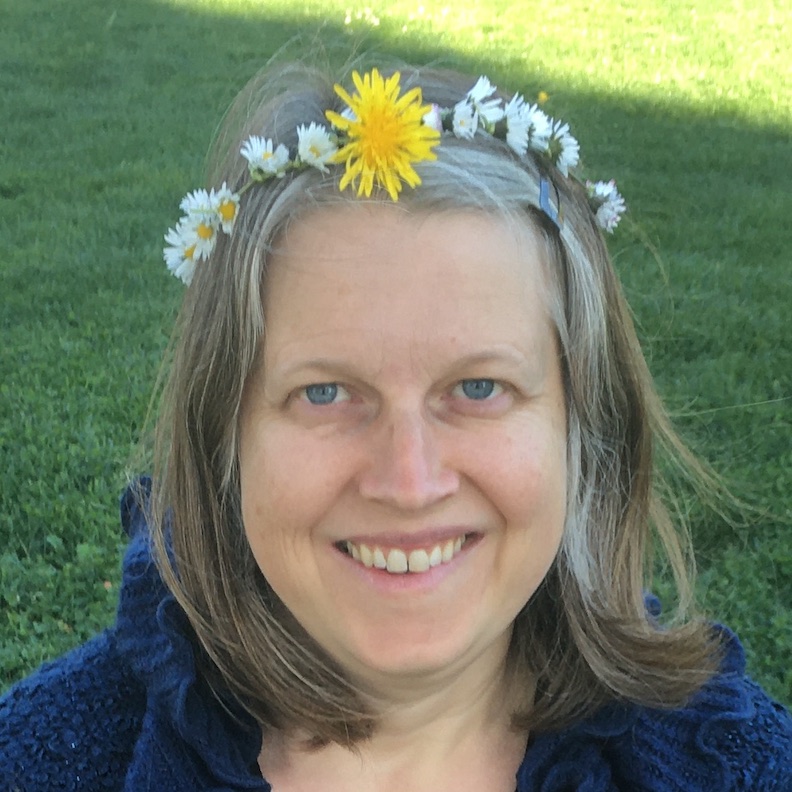 |
Sam McKagan (she/her) is the creator and director of PhysPort, a website that supports physics faculty in research-based teaching and hosts open-source curricular materials, including the ACORN Tutorials. She has conducted research into physics faculty members’ and department heads’ needs around research-based teaching and assessment, and conducted several meta-analyses of the impact of research-based teaching in physics. For this project, Sam worked with Adrian to design the ACORNS Tutorials website on PhysPort, and helped analyze interviews with faculty. |
 |
Adrian Madsen (she/her) is the assistant director of PhysPort, a website that supports physics faculty in research-based teaching and hosts open-source curricular materials, including the ACORN Tutorials. She has conducted research into physics faculty members’ and department heads’ needs around research-based teaching and assessment, and conducted several meta-analyses of the impact of research-based teaching in physics. For this project, Adrian worked with Sam to design the ACORNS Tutorials website on PhysPort, and helped analyze interviews with faculty. |
Team Alumni
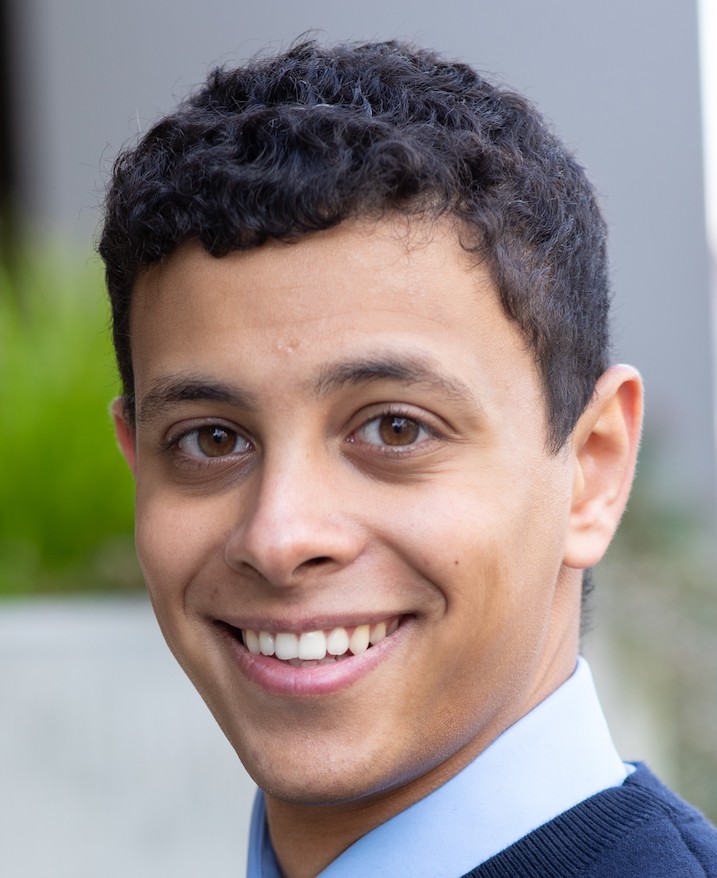 |
Yohannes M. Abraham (he/him) is a former undergraduate cellular and molecular biology student at Seattle Pacific University interested in STEM teaching and learning as well as the medical field. He joined physics research to better understand why students’ have common conceptual misconceptions about physics and how to address these difficulties with a resource-oriented teaching and learning approach. He plans to work in a biology laboratory and wishes to attend medical school in the future. During his free time, he loves to play soccer, try different cuisines, and read Italian classic books. |
| Cheyenne Broadfoot is a graduate from University of Washington Bothell with a B.S. in Physics and is currently pursuing a M.S. in Coastal Zone Management and Marine Conservation from University of Miami Rosenstiel School of Marine and Atmospheric Science. She has a passion for learning and wants to use the acquired knowledge to work for an organization addressing wastewater and pollution in third world countries, specifically Costa Rica. | |
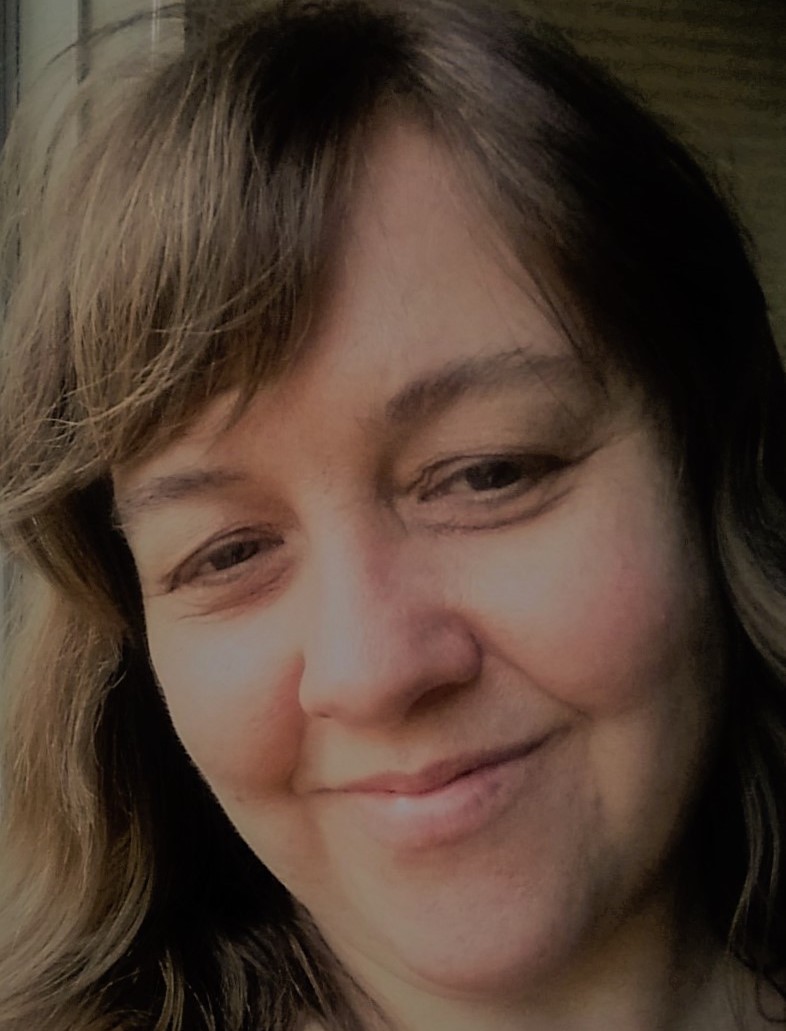 |
Beth Gallatin is a former undergraduate student at South Puget Sound Community College studying computer science. She joined the physics education research project to help develop a deeper understanding of students' conceptual resources and begin exploring strategies to create a more inclusive and diverse society of physicists. She is currently participating in research for the LIGO Collaboration working on the search for continuous wave gravitational radiation. She loves thinking and wondering about gravity, and the role it plays in our understanding of the universe. She has a persistently curious mind, and plans to focus on a career that bridges scientific resources, nature, and humanity. |
 |
Jon Geiger is a graduate of Seattle Pacific University, where he received degrees in Physics, Applied Mathematics, and Honors Liberal Arts. He served as a Learning Assistant for three years, and has worked with the team on a project investigating the utility of natural language processing in characterizing students’ conceptual resources in physics. |
 |
Brynna Hansen is a former undergraduate student studying Cellular and Molecular Biology at Seattle Pacific University, and does physics education research as a side hobby! She hopes to attend medical school following graduation. Outside of school Brynna loves to read, exercise and spend time with loved ones. |
 |
Tra Huynh (she/her) is a former postdoctoral scholar at University of Washington Bothell. She is a physics education researcher and she has been conducting qualitative research on faculty and student professional development and equity education through multiple lenses of methodology and theories. She loves creating ideas with people and turning them into research. She is an aspiring knitter and baker. |
 |
Katie Marvin is a graduate of UW Bothell with a BS in physics. Before becoming a student, she was a dog trainer who taught large classes to the general public. Her experience in behavioral training, communication, and observation served her well as she worked her way through an associate's degree at South Seattle College. These same skills would prove useful when she was encouraged to join the physics education research project for her independent research credits. She has a passion for learning, teaching, and bringing out the best in others. After graduating she landed a job within the semiconductor industry. She plans to become a physics instructor someday after she has gained some real world application experience. With the free time she has, she likes to practice her woodwind instruments, hike, play retro games, and hang out with her dog, Zac. |
 |
Clausell Mathis is a former postdoctoral scholar in physics at the University of Washington - Seattle. Clausell has been engaging in physics education research over the past 4 years with a focus on understanding how physics instructors can incorporate culture-based equitable approaches to teaching from a curriculum development, student learning, and teacher identity lens. |
 |
Jon Owen (he/him) is a former undergraduate student in physics at Seattle Pacific University. He is works to analyze videos of classrooms using ACORN Physics tutorials to understand how students’ conceptual resources are activated and refined. |
|
Olin Sorby is a former Undergraduate student studying Applied Physics and Norwegian language at the University of Washington. He worked with Tra on identifying conceptual resources in kinematics, pertaining to productive use of force reasoning in kinematics problems. |
|
 |
Marcella Su (she/her) is a graduate of the University of Washington Bothell with a B.S in Biochemistry and a minor in Health Studies. She is pursuing medicine to become a doctor. She believes that research is essential to medicine in order to propel the field of medicine to create effective treatments for the members of our community. She hopes to practice and provide quality care for her community after medical school, as closing the gap between ethnic and marginalized groups is a core passion of hers. She is currently a Research Assistant at Veterans Affairs, Seattle Epidemiologic Research and Information Center. During her time off she helps her family in residential housing management, volunteers at International District Emergency Center, located in Seattle’s Chinatown, and does sewing with a sewing machine to help tailor clothing for family and friends. |
 |
Andrea Wooley (she/her) is a former undergraduate physics student at Western Washington University with experience in physics education research and Mossbauer spectroscopy. The culture of physics is central to her research interests, in particular she is passionate about issues about justice, equity, inclusion and diversity. She’s a transfer student from South Seattle College where she studied students’ perspectives of physics in addition to working as a tutor and peer navigator. She spends her weekends hiking in Larabee state park, playing pool and taking care of her house rabbit, Monty. |
Research
ACORN Physics Tutorials are developed iteratively, in conversation with research:
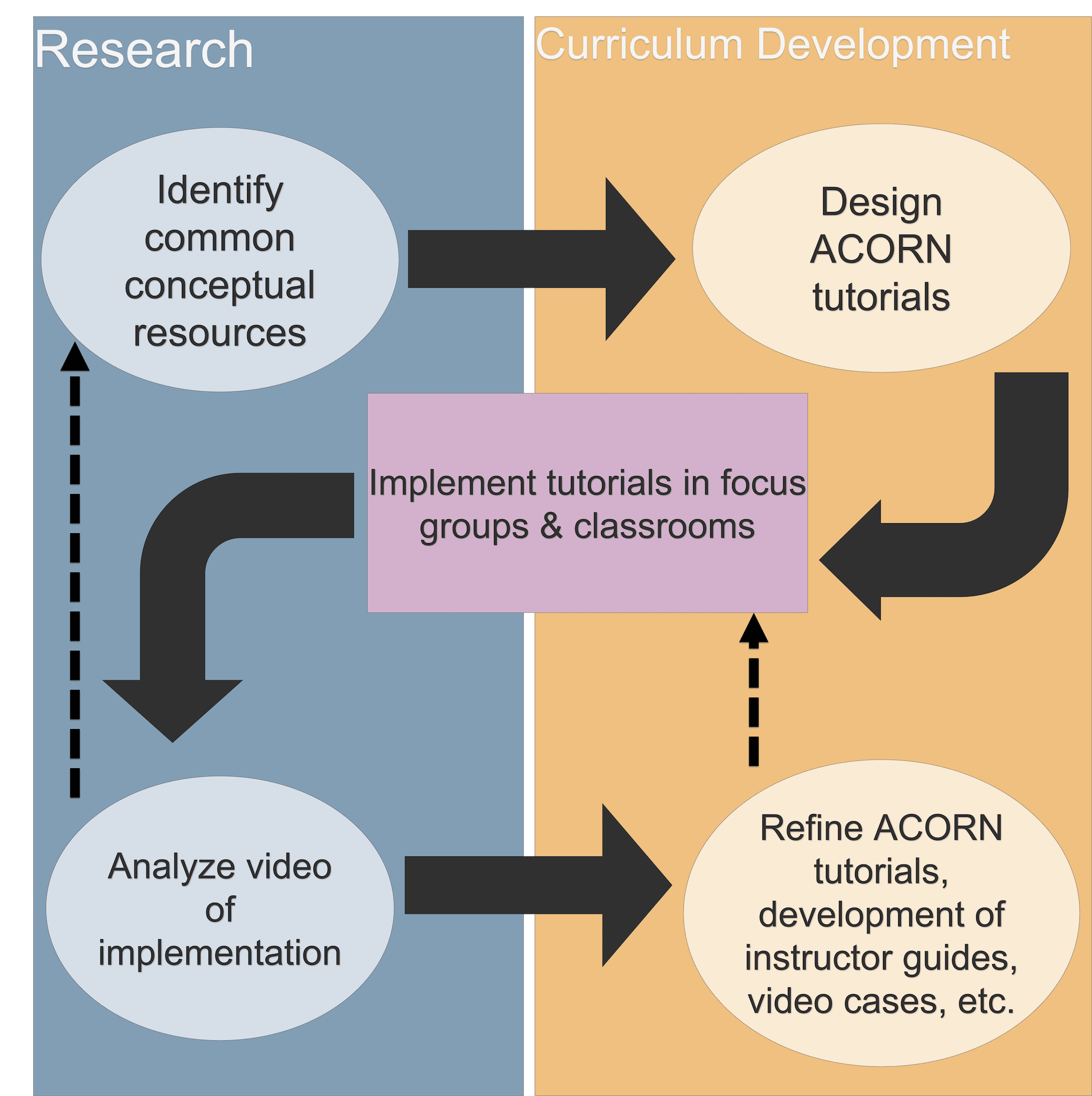
Researchers from our team first use student written responses to conceptual questions to identify specific, common conceptual resources for understanding a particular topic. This research shapes the initial design of an ACORN Physics Tutorial, which elicits and then builds from identified conceptual resources, toward models, mechanisms, and concepts. These tutorials are then implemented in focus groups or classrooms, where students are video-recorded as they learn. Video analysis identifies ways in which the tutorial is working or not working as planned – or working well in unexpected ways – and this analysis then shapes the refinement of the materials. Often materials iterate through this process multiple times before being shared more broadly.
Research identifying students’ conceptual resources for understanding physics
Kinematics
- T. Huynh, A. Alesandrini, L. Bauman, O. Sorby, and A. Robertson, Drawing on force ideas for kinematic reasoning in introductory physics, presented at the Physics Education Research Conference 2023, Sacramento, CA, 2023.
- C. Broadfoot, B. Hansen, A. Robertson, and L. Goodhew, Identifying student resources for understanding kinematics, presented at the Physics Education Research Conference 2020, Virtual Conference, 2020.
Forces
- T. Huynh, A. Alesandrini, L. Bauman, O. Sorby, and A. Robertson, Drawing on force ideas for kinematic reasoning in introductory physics, presented at the Physics Education Research Conference 2023, Sacramento, CA, 2023.
- A. Robertson, L. Goodhew, R. Scherr, and P. Heron, University student conceptual resources for understanding forces, Phys. Rev. Phys. Educ. Res. 17 (1), 010121 (2021).
Linear Momentum
- B. Hansen, L. Bauman, Y. Abraham, M. Valentin, and A. Robertson, Identifying student resources for understanding linear momentum, presented at the Physics Education Research Conference 2021, Virtual Conference, 2021.
Energy
- H. Sabo, L. Goodhew, and A. Robertson, University student conceptual resources for understanding energy, Phys. Rev. Phys. Educ. Res. 12 (1), 010126 (2016).
Circuits
- L. Bauman, T. Huynh, and A. Robertson, Substance-based and sequential reasoning about current: An example from a bulb-ranking task using a resources theoretical lens, Phys. Rev. Phys. Educ. Res. 20 (1) 010124 (2024).
- L. Bauman, B. Hansen, L. Goodhew, and A. Robertson, Student conceptual resources for understanding electric circuits, Phys. Rev. Phys. Educ. Res. 20 (2) 020128 (2024).
- L. Bauman, J. Corcoran, L. Goodhew, and A. Robertson, Identifying student conceptual resources for understanding electric current, presented at the Physics Education Research Conference 2020, Virtual Conference, 2020.
Waves
- L. Bauman, L. Goodhew, and A. Robertson, Students’ use of conceptual resources for understanding superposition, presented at the Physics Education Research Conference 2019, Provo, UT, 2019.
- L. Goodhew, A. Robertson, P. Heron, and R. Scherr, Student conceptual resources for understanding mechanical wave propagation, Phys. Rev. Phys. Educ. Res. 15 (2), 020127 (2019).
- A. Robertson, L. Goodhew, P. Heron, and R. Scherr, Pulses as not-objects: student responses to a new question about the superposition of mechanical waves, Phys. Educ. 54 (5), 055023 (2019).
Heat and Temperature
- A. Alesandrini, T. Huynh, L. Bauman, and A. Robertson, Identifying student resources for reasoning microscopically about heat and temperature, presented at the Physics Education Research Conference 2022, Grand Rapids, MI, 2022.
- Y. Abraham, M. Valentin, B. Hansen, L. Bauman, and A. Robertson, Exploring student conceptual resources about heat and temperature, presented at the Physics Education Research Conference 2021, Virtual Conference, 2021.
Research analyzing implementation of ACORN Tutorials
- L. Bauman, L. Goodhew, A. Alesandrini, A. Snow, and A. Robertson, Shifts in students’ responses to conceptual questions after a new physics conceptual worksheet: Preliminary findings, presented at the Physics Education Research Conference 2023, Sacramento, CA, 2023.
- A. Robertson, L. Bauman, Y. Abraham, B. Hansen, H. Tran, and L. Goodhew, Resources-oriented instruction: What does it mean, and what might it look like?, Am. J. Phys. 90 (7), 529 (2022).
- L. Goodhew, A. Robertson, and P. Heron, A case of resources-oriented instruction in calculus-based introductory physics, presented at the Physics Education Research Conference 2020, Virtual Conference, 2020.
Related research by the development team
- J. Owen, L. Goodhew, and B. Hansen, "Which has more energy?" - An example of responsive teaching in university physics, presented at the Physics Education Research Conference 2023, Sacramento, CA, 2023.
- A. Robertson, L. Goodhew, L. Bauman, B. Hansen, and A. Alesandrini, Identifying student conceptual resources for understanding physics: A practical guide for researchers, Phys. Rev. Phys. Educ. Res. 19 (2), 020138 (2023).
- A. Snow, P. Heron, L. Bauman, A. Robertson, and L. Goodhew, A case in which canonically incorrect ideas do not hinder conceptual progress in introductory physics, presented at the Physics Education Research Conference 2023, Sacramento, CA, 2023.
- J. Geiger, L. Goodhew, and T. Odden, Developing a natural language processing approach for analyzing student ideas in calculus-based introductory physics, presented at the Physics Education Research Conference 2022, Grand Rapids, MI, 2022.
- A. Robertson, L. Goodhew, P. Heron, and R. Scherr, Impetus-Force-Like Drawings May Be Less Common Than You Think, Phys. Teach. 60 (4), 254 (2022).
- L. Bauman, C. Mathis, S. McKagan, A. Madsen, K. Marvin, L. Goodhew, and A. Robertson, Centering physics faculty ideas about resources-oriented instruction, presented at the Physics Education Research Conference 2021, Virtual Conference, 2021.
- L. Goodhew, A. Robertson, P. Heron, and R. Scherr, Students’ context-sensitive use of conceptual resources: A pattern across different styles of question about mechanical waves, Phys. Rev. Phys. Educ. Res. 17 (1), 010137 (2021).
- A. Robertson, L. Goodhew, R. Scherr, and P. Heron, Impetus-Like Reasoning as Continuous with Newtonian Physics, Phys. Teach. 59 (3), 185 (2021).
- R. Mondesir and A. Robertson, Toward characterizing the demographics of introductory physics courses, presented at the Physics Education Research Conference 2020, Virtual Conference, 2020.
- L. Goodhew, A. Robertson, P. Heron, and R. Scherr, Examining the productiveness of student resources in a problem-solving interview, presented at the Physics Education Research Conference 2018, Washington, DC, 2018.
A pedagogy course to support resources-oriented instruction
Rachel E. Scherr (University of Washington Bothell) and Lisa M. Goodhew (Seattle Pacific University)
These materials are suitable for a pedagogy course to support learning assistants (LAs) and teaching assistants (TAs) in using resources-oriented instruction. We suggest weekly readings, weekly reflections, one project per term, and one peer observation per term.
 Background
Nationally, student instructional assistants play an important role in undergraduate STEM education. Graduate and undergraduate students help STEM faculty make their courses more interactive, especially by facilitating small-group interactions in large classes. (At UWB and SPU, these instructional assistants are all undergraduates, and are called “peer facilitators” (UWB) or “learning assistants” (SPU).) Student instructional assistants not only improve the quality of instruction for their students, but also enhance their own educational experience with a low-stakes, high-access, early teaching experience, and are recruited into the teaching profession.
The instructional assistants’ experience is at its best when it includes a pedagogy course, in which their experiential learning in classrooms is enriched by learning about the big ideas of STEM teaching and learning. At UWB, undergraduate physics peer facilitators who take a pedagogy course have been struck by the difference it made to them: one reflected, “In the beginning, I had never considered using open questions to promote discussion and freedom to speculate and share ideas, which I now know is how students have their ‘aha’ moments. I now try to figure out student’s mental models and create my advice and help based on that.” Pedagogy courses also provide “stealth” professional development to the faculty that supervise them, engaging them in insightful discussions about best-practices teaching and learning that support reflection on their own practices.
In pedagogy courses around the US, instructional assistants read education literature and engage in activities and discussions to deepen their understanding of best practices teaching and learning. As part of the Conceptual Resources project, we are developing a pedagogy course that will support resources-oriented instruction: one that will support instructional assistants to see student ideas in terms of productive resources, and teach them to support students in recognizing and building on each others’ scientific ideas. The primary learning goals for the course are for instructional assistants to develop both an appropriate learning theory and practical skills:
- Instructional assistants should be able to (A) explain the teaching benefit of detecting and interpreting students’ physics ideas, and (B) develop practical strategies for bringing out and building on students’ ideas.
- Instructional assistants should be able to (A) explain the learning benefits of collaborative work, and (B) support students in understanding and building on each other’s ideas.
These learning goals are a long way from where most instructional assistants begin. One learning assistant expressed a common starting point: “I think that being an LA means our job is to carefully guide the students through the material... I hope to accomplish communicating these physical ideas well enough to the students that the ideas are ingrained into them.” The shift from “explainers” to facilitators who know how to elicit, interpret, and respond to student thinking is significant for many instructional assistants, in some cases transforming their view of their own educational experiences.
A high-quality pedagogy course is especially important in this project because early evidence indicates that students’ experience of their own ideas as valuable and potentially fruitful may depend more on how the resources-oriented instructional materials are implemented than the materials themselves. Our pilot tests of resources-oriented worksheets on wave propagation and circuits featured numerous instances in which students generated sophisticated scientific questions or models, and were at the same time frustrated by their lack of “right answers.” One group put it this way:
Jian: That was… very laid back and stressful at the same time.
Wendy: Yeah.
Jian: Like I just gotta know—
Wendy: Yeah, that’s how tutorial will be!
Paige: I don’t do well with not having clear answers about things. I just need to know.
Jian: I’m like come on tell me! Or at least help me understand.
Paige: I think we were supposed to be made more comfortable with uncertainty — which I am not happy about!
In many instances of frustration, an instructor’s (professor, TA, or LA) guidance was significant for the progress of students’ thinking. In some interactions, the instructors’ guidance either confused students further or affirmed notions that there was no real merit to the activity. In other instances, conversation with an instructor helped students to navigate their uncertainty in productive ways or supported students in answering their own questions in ways that refined and extended their understanding. This leads us to think that effective instructor preparation is important for successful implementation of resources-oriented instruction. In particular, our preliminary evidence suggests that resources-oriented instruction is supported by a commitment to understanding and building from student thinking and by flexibly deployed knowledge of scientific concepts and practices.
Outline of course activities
Typical class session
|
First 15 minutes: Each Learning Assistant shares a high and low of each peer assistant’s week of teaching, followed by reflection about why this may have happened and what to take away. LAs might offer each other advice and empathy, and Pedagogy course instructor might offer encouragement, suggestions, or design a future lesson to address an LA’s concern |
|
|
30-40 minutes, as class time allows: [Option A] Group discussion of a reading assignment (see sample course schedules below for suggested reading assignments). |
[Option B] Activity such as “Listening three ways,” the “Non-fixing interview,” or discussion of a Periscope episode. The following Periscope lessons examine students working through ACORN tutorials and highlight questions that are particularly important for teaching with ACORN tutorials: How do students build new ideas? What enables students to answer their own questions? Should I help students solve problems efficiently? |
|
Last 5 minutes: Each Learning Assistant shares one takeaway from this week’s class that they will try out in their teaching next week. |
|
Sample Course Schedule & Learning Goals
|
Wk |
Learning goals |
In-class activity highlights |
Reading and reflection (homework assignments) |
|
1 |
Anticipate a variety of different ways students might explain a physics concept Explain how results of cognitive science are relevant to how students learn (physics) |
Observe different ways students explain a physics concept. Periscope: What ideas do students have about momentum?” Develop strategies for eliciting/supporting multiple perspectives. How can I promote equitable sensemaking by setting expectations for multiple perspectives? |
Reading: Scherr & Redish, "Newton's Zeroth Law: Learning from listening to our students" Reflection: Describe a student interaction that gave you insight into the student's mental model and/or prior knowledge about a physics concept. |
|
2 |
Periscope: What ideas do students have about mechanical energy? |
Reading: Redish, "Implications of cognitive science for teaching physics" Reflection: Come up with as many ways as you can to answer the following physics question [choose one]. |
|
|
3 |
Recognize and describe the “disciplinary substance” of students’ ideas Explain the teaching benefit of seeing students’ ideas in terms of productive resources |
Periscope: How can I bring out students’ ideas? Discuss Sean numbers Introduce formative assessment + the formative assessment cycle |
Reading: Blosser, “Ask The Right Questions” Reflection: Share some teacher questions that you remember from recent interactions: either questions you asked when you were teaching, or questions that a teacher asked you. What type of question is it? What is its function? What does it say about the kind of teaching that is happening? |
|
4 |
Non-fixing interview - practice in class |
Reading: Hammer, “Student resources for learning introductory physics” Reflection: Reflect on a time in your teaching where you noticed a student had a misconception or wrong idea. How did you respond? Could that idea have been fruitful in another situation? |
|
|
5 |
Plan questions and activities to respond to / build on students’ scientific ideas Explain the teaching benefit of detecting and interpreting students’ physics ideas |
Final project discussion and planning |
Reflection: Reflect on a time in your teaching where you noticed a student had a productive idea, even if it wasn’t totally correct. How did you respond? How could that idea be fruitful for the student’s learning? |
|
Periscope: Will students engage in evidence-based argumentation? |
Reflection: How can students/ instructors cultivate a classroom learning community where everyone gets to show their expertise, and where their resources are welcome contributions? |
||
|
7 |
Develop practices for facilitating productive group dynamics/discussions Explain multiple different theories and frameworks for how people teach and learn Develop and practice strategies for fostering an inclusive and equitable learning environment |
Discuss ACORN talk moves flowchart |
Reflection: Describe a time in your teaching where you used a specific talk move? How did it go? |
|
8 |
Analyze cultural displays of science knowledge, such as hip hop physics |
Reflection: Reflect on your teaching interactions now as compared to the start of the quarter. What have you gotten better at over the past several weeks? |
|
|
9 |
Final project presentations: “Non-fixing interview” (Interview a single person to learn about their ideas about a physics concept. Do not teach them anything.) |
||
|
10 |
|||
Growth Mindset & Equitable Group Work
|
Wk |
Learning goals |
Activity highlights |
Reading and reflection |
|
1 |
Explain the teaching/learning benefit of collaborative work Explain the inequities that arise in an unstructured learning environment |
Apple bridge design challenge |
Reading: Mazur video - Peer Instruction for Active Learning Reflection: How do you think group work is helpful for students? Do you think it’s helpful for all students? |
|
2 |
Periscope: If you disagree or How do students build new ideas? |
Reading: Woolley, "Evidence for a collective intelligence factor in the performance of human groups" and "What makes a team smarter?" Reflection: Describe an experience you have had with collective intelligence of a group that you have been in. |
|
|
3 |
Support students in understanding and building on each other’s ideas Describe techniques that add structure and equity to a classroom |
Discuss group roles, referring to Group Roles and POGIL role cards traditional roles |
Reading: Sathy & Hogan article “How to make your teaching more inclusive” Reflection: What is your best skill as a group member? What skill do you think you should work on as a group member? |
|
4 |
Reading: Dweck, Boosting Achievement With Messages That Motivate Reflection: Have you thought that there is a “physics brain” or that someone can be a “physics person”? What attributes did (do) you associate with being a “physics person”? |
||
|
5 |
Explain fixed and growth mindset and their relevance for teaching physics How to interact with students so that all get to speak Know when to step in vs. let students keep going on their own |
Periscope: Do students have the right to be told whether they are correct? Periscope: Should I help students solve problems efficiently? |
Reading: Leslie et al. - 2015 - Expectations of brilliance underlie gender distributions across academic disciplines, Little, Proudness Reflection: What evidence of fixed or growth mindset have you already observed this term? |
|
6 |
What inclines students not to speak? Periscope: How can I bring out student ideas? or Moving box |
Reading: Scherr, Fixed and growth mindsets in physics graduate admissions Reflection: How do you decide to start interacting with a group of students? |
|
|
7 |
How do you decide to start interacting with a group of students, and what does that have to do with fixed vs. growth mindset? Take a statement from the article and turn it into a growth mindset statement. Make a fixed-mindset statement about yourself and turn it into a growth mindset statement. |
Reading: Dweck, “Carol Dweck revisits the ‘Growth Mindset’” Reflection: If you could go back in time and give your students some advice at the beginning of the term (or the year), what would it be? Why? |
|
|
8 |
Describe techniques for supporting a growth mindset in physics teaching Being a good intellectual leader/coach in a group even if you don’t know the answer yourself |
Periscope: How does teaching shape a person’s self-image? or How should instructors handle their own mistakes? |
(no reading) Reflection: Beyond your development as a PF/LA, we are also interested in your development as a student and as a person. To what extent have the topics discussed in this course been useful beyond your PF/LA experience? |
|
9 |
Final project: Analyze an excerpt of yourself teaching (students video- or audio-record themselves teaching, and choose a 2-3 minute clip to analyze and reflect on. See “Record yourself” under Projects below.) |
||
|
10 |
|||
Files
-
Download the ACORN talk moves flowchart:

A one-page handout for instructors with ideas for questions to ask students to prompt their thinking while working on ACORN Physics Tutorials -
Download the Listening three ways:
Handout for a class activity to support LAs in listening more effectively -
Download the Non-fixing interview:
Handout for a class activity to support LAs in deeply understanding someone else's ideas
Readings
Readings for LAs to learn about conceptual resources
Student resources for learning introductory physics
Misconceptions Reconceived: A Constructivist Analysis of Knowledge in Transition
Discovery Learning and Discovery Teaching: Cognition and Instruction
Implications of cognitive studies for teaching physics
Newton's Zeroth Law: Learning from Listening to Our Students
Attending and Responding to Student Thinking in Science
"Charges are everywhere": A case of student sensemaking about electric current
Examining the productiveness of student resources in a problem-solving interview
Other readings that support a resources orientation
Boosting Achievement with Messages that Motivate
Expectations of brilliance underlie gender distributions across academic disciplines
Evidence for a Collective Intelligence Factor in the Performance of Human Groups
G: The Miseducation of Larry P
Why Peer Discussion Improves Student Performance on In-Class Concept Questions
Reflections
Reflection is a key practice for integrating experience. In general, we suggest that satisfactory teaching reflections must do the following:
- Be posted on time
- Consist of at least 300 words OR two minutes of video
- Demonstrate that you have read the course material
- Be accurate about the course material
- Draw explicit connections between ideas raised in the readings to teaching or learning experiences you have had
- Convey something that personally struck you as interesting, compelling, engaging, or otherwise moved you
- Write or speak in a clear manner – your style can be less formal than typical academic prose, but it should be serious and engaged with ideas
Reflection prompts
Identify one ‘take-away’ related to how you will respond to students’ contributions this term. What will you commit to try out in your practice to shift deeper into an asset-based view of sense-making? ("Asset-based" means you think of students' ideas as being valuable, instead of wrong or absent; it is the opposite of "deficit-based.") A possible prompt: “In order to__________, I will work to_______. I will know I am making progress if__________."
Why do you think groups are effective for learning? You may refer to the course you are helping teach or your own experience as a student.
What is your best skill as a group member? What skill do you think you should work on as a group member?
Describe an experience you have had with “collective intelligence” of a group that you have been in.
How do you decide to start interacting with a group of students?
Have you thought that there is a “physics brain” or that someone can be a “physics person”? What attributes did (do) you associate with being a “physics person”? How might this affect how someone participates in a physics class?
What evidence of fixed or growth mindset have you observed this term? This could come from working with students, reflecting on your own mindset, or observing other instructors.
Share some teacher questions that you remember from recent interactions: either questions you asked when you were teaching, or questions that a teacher asked you. What type of question is it? What is its function? What does it say about the kind of teaching that is happening?
How do you know someone has learned something? You can’t see into their head. Think of someone you know who has a lot of expertise in some area, and it’s not the kind of thing where you take a test. How does their expertise show?
Describe a time when you had a feeling of learning, but later realized that your learning was not as high-quality as it felt at the time; or when you felt like you were not learning, but later realized your learning had been deeper than you realized.
Describe a teaching experience you had recently that felt successful to you. What about it felt successful? Describe a teaching experience you had recently that felt less successful to you. What leads you to see it this way?
How can students/ instructors cultivate a classroom learning community where everyone gets to show their expertise, and where their resources are welcome contributions?
Describe a student interaction that gave you insight into the student's mental model and/or prior knowledge about a physics concept.
If you could go back in time and give your students some advice at the beginning of the term (or the year), what would it be? Why?
If you have a future career or other life goal, how is being an LA applicable to that goal?
Beyond your development as a LA, we are also interested in your development as a student and as a person. To what extent have the topics discussed in this course been useful beyond your LA experience?
Reflect on your teaching interactions now as compared to the start of the term, including the "specific commitment" you made early on. What have you gotten better at this term?
How has the experience of being a LA impacted you as a student? Do you find yourself thinking/acting differently (in class, when studying, when discussing or working with peers, or in other areas of life) in ways that you think have been influenced by your LA experience? Explain/describe.
Projects
Below are multiple suggestions for term projects for LAs. We suggest one project per term.
General instructions
The task for this project is to interview a single person to learn about their ideas about a physics concept. Your only purpose in this interview is to learn about their idea. Your purpose is NOT to teach them anything.
- DO: Openly inquire into their thinking, with curiosity. Ask questions for the sake of finding out. Paraphrase what you understand them to be saying to see if you are understanding them correctly. Spend at least 30 minutes learning about their idea.
- DO NOT: Teach, lead, coax, help, critique, challenge, correct, give feedback, judge, or in any way attempt to change, repair, or fix your interviewee's ideas.
Assignment 1: Interview topic
- Choose one of the posted physics problems (below) to use for your interview.
- Write your own answer to the question/problem, using your best conceptual physics understanding.
- Write some questions that you want to ask your interviewee along the way, to help you learn about their thinking. Some prompts you might consider: “what do you mean?” “tell me more about that.” or “can you walk me through your thought process about ____?”
Physics problems to choose from:
- Are all the colors in the rainbow?
- Is the burn one may get from touching a hot pan the same as, or different from, a sunburn?
- If you were trying to throw a ball as far as you could, would you be more successful throwing the ball on Earth or on the moon?
- A bird is temporarily contained in a large sealed glass container (with plenty of air), which is placed on a scale. When the bird flies in the container, does the reading on the scale change?
- A monkey hangs on a rope. The rope goes up over a pulley, and on the other end is a weight, which exactly balances the monkey. Everything is initially stationary. Then, the monkey tries to climb the rope. What happens?
Assignment 2: Interview subject
- Describe the specific person that you will be interviewing. This person should have agreed to be interviewed by you. Don't tell us their name (for confidentiality), but do tell us generally who they are, how you know them, what their physics experience is, etc.
- State the time when you have agreed to conduct the interview (before [date]).
Assignment 3: Interview
Conduct your interview and video- or audio- record it. Post either a video of your entire 30-minute interview, or the entire transcript of your interview. You can use Zoom’s AI transcription for this, or an AI transcription service like otter.ai.
Assignment 4: Episode transcript
- Choose a short episode (1-5 minutes) from your interview that (1) shows part of your interviewee's physics ideas and (2) is interesting to you.
- Transcribe at least one minute and no more than five minutes. If you use an automatic transcription service, check the accuracy of the transcript.
- Use a pseudonym for your interviewee.
- Number the lines of your transcript (to make it easier to discuss later).
Assignment 5: Reflection
Write a reflection on your experience of conducting this interview and/or the content of the interview. Address the following questions:
- What gestures, questions, representations, gave you insights into the interviewee’s thinking? What went well? What could have gone better?
- Were there instances (questions, gestures, representations, etc.) where you coaxed, helped, critiqued, challenged, corrected, (etc) your interviewee’s thinking? Describe at least one instance of this (unless you’re sure it never happened).
- What (if anything) did you learn/discover?
- What (if anything) did the person you interviewed learn/discover during the course of this interview? Point to specific moments in the interview that give evidence of this learning/discovery.
Satisfactory reflections must do the following:
- Be posted on time
- Consist of at least 500 words
- Be accurate about the interview material
- Draw explicit connections to teaching or learning experiences you have had
- Convey something that personally struck you as interesting, compelling, engaging, or otherwise moved you
- Write in a clear manner – your style can be less formal than typical academic prose, but it should be serious and engaged with ideas
- Contain no more than 3 errors to Standard Written English
Assignment 6: Presentation
In class, we’ll role-play each other’s transcripts and discuss what we notice.
This project is to analyze a video episode of yourself interacting with students, especially in terms of [theme - e.g., student ideas or group dynamics].
Assignment 1: Recording plan
Describe how you will record yourself interacting with students in class. A satisfactory recording plan will enable you to
- Record at least three different interactions with groups of students in your class, each at least 2 minutes long, and
- Capture both audio and video, so that everyone in the interaction can be seen and heard.
You may recruit fellow LAs to help. If there is anything you will want the professor to do, make that request now.
Assignment 2: Sample recording
Make a sample video recording of yourself interacting with a group of students and submit it here. A satisfactory sample recording meets these criteria:
- You are interacting with a group of students.
- You and the students you interact with can all be heard and understood.
- To the extent possible, you and the students you interact with are all visible. (Inevitably there will be the back of some people's heads.)
- The recording is at least 2 minutes long.
- You are able to either submit the recording to this Canvas assignment or transmit it to the instructor some other way. (Some recording techniques result in files that are too large to submit or send. If this is the case for you, find a way to either make your files smaller, or successfully transmit larger files.)
Assignment 3: Three recorded episodes
Record and submit three video episodes of yourself interacting with students in class.
A satisfactory episode meets the same criteria as for the sample video recording PLUS:
- It illustrates [theme - e.g., student ideas or group dynamics].
Assignment 4: Transcript
Transcribe one of the three episodes you submitted and submit the transcript here. A satisfactory transcript meets these criteria:
- Represents least two minutes of your interaction with students
- Clearly indicates who is speaking when, and what they are saying
- Describes any non-verbal interactions that seem important (gestures, eye contact, etc)
- Uses pseudonyms in place of students' names
- Is line-numbered
Assignment 5: Reflection
Write a reflection on the episode you transcribed, including responses to the following questions:
- What [theme - e.g., student ideas or group dynamics] do you notice?
- How did you respond?
- What would you do the same way if you were in this situation again?
- What would you do differently if you were in this situation again?
A satisfactory reflection:
- is at least 500 words long
- makes clear connections to course readings and/or discussions
- is accurate about the course material
- is written in standard English, though you do not need to use formal academic language or tone
- is posted on time.
Assignment 6: Presentation
In class, we’ll watch each other’s videos and discuss what we notice. [Alternative: In class, we will re-enact the episode using the transcript and discuss what we notice.]
- You will have the floor for 15 minutes.
- [Instructor] will bring enough copies of your transcript for everyone, will be ready to play your selected video episode, and will serve as timekeeper.
- Please lead an interactive discussion of your selected episode. Focus on the reflection prompts from Assignment 4, but don't just say your answers to these questions -- lead an interactive discussion, in which you invite us to share our observations and ask you questions.
Overview
At the end of this term, you will share your development with other Learning Assistants, Faculty Mentors, Pedagogy Instructors, and the campus community at large during the [name of poster session].
- The [name of poster session] will take place on [date/time] in [location].
- You are expected to attend this poster session for at least 90 minutes.
- Your poster will illustrate your individual growth and experiences as an LA, working from one of a few possible prompts or one of your choosing.
- Your poster will highlight evidence and examples to promote conversation with visitors.
- In addition to sharing your experiences, you will give feedback to other LAs about their presentations by visiting their posters and engaging in conversation.
Developing your poster
How have you developed as an LA and student throughout your LA experience? How has your development been related to your specific class? Track your own development from the beginning to the end of your time as a LA by examining how you understood and implemented concepts discussed in your pedagogy class and prep sessions. This is your opportunity to demonstrate your learning in this class, and also, the aspects of your role and development as an LA that you are excited to share with others! What have you learned as a LA that’s worth sharing with the rest of the LA community?
Each poster presentation should answer one of the following prompts:
- YOUR GROWTH. What did you learn as a LA? Describe your growth throughout your LA experience. Many of you came in with previous experiences in tutoring or teaching--what did you learn that built upon these formative experiences? What evidence do you have to demonstrate your growth? What structures, lessons, and/or interactions helped you grow and change in these regards?
- YOUR IMPACT ON STUDENT LEARNING. How did you impact student learning? What evidence do you have to support these claims? We expect you to be able to fluidly discuss specific actions you have taken and how these aligned with skills and overarching concepts of pedagogy discussed in your LA training. How did the ways you supported student learning evolve throughout your experience? What structures, lessons, and/or interactions helped you develop your approaches to supporting student learning?
- YOUR RECOMMENDATIONS. What advice do you have for future LAs and/or faculty for your specific course? What is it about the subject area and specific ways in which you interacted with students that led you to use certain pedagogical techniques? Which skills are most important for LAs in your specific context? What evidence do you have to support the importance of these particular techniques? What kinds of opportunities could you imagine LAs in your position engaging in during future courses that would promote better student learning and LA-student interactions? How can LAs be better utilized to promote student learning in this class? Recommend small or large changes.
- YOUR CHOICE... Propose a topic of your choosing to your instructor for approval as a final project.
Assignment 1: Examine examples
These examples show the type of content we expect: [examples here]
- Choose 3 of these that appeal to you.
- For each one, write at least 100 words saying what you learned from it and what qualities of this example you want to emulate.
Assignment 2: Choose prompt and plan evidence
- Commit to one of the four options described above.
- Describe the evidence you will need to support your presentation.
- Describe how and when you will gather the above evidence.
(To help you follow through on this commitment, your instructor will create specialized assignment(s) for you in the coming weeks: e.g., if you’re going to administer a survey, she will create assignments for you to (1) create and (2) administer the survey.)
Assignment 3: Present evidence
By now, you have gathered evidence to support your poster presentation. Analyze this evidence and share it visually. If your evidence includes quantitative data, use data visualizations (bar charts, pie charts, etc) to show patterns and trends in the data you collected. If not, think about how you will visually show what you’ve found.
Assignment 4: Main finding
- Watch this video about better scientific posters: How to Create a Better Research Poster in Less Time
- Draft the main finding – the single sentence that will be in giant letters in the middle of the poster. We will workshop everyone’s sentences in class.
Assignment 5: Draft poster
Submit a draft of your poster presentation here. In class, we will display and discuss each draft, to give you feedback before you prepare your final presentation.
Assignment 6: Verbal presentation (in class)
Presenting your poster at a poster session actually means having conversations, not delivering a speech. In class, we will each practice the opening line of our poster conversation.
Finally: Present at poster session.
Meet one or two other LAs at other universities and teach us about them. [Instructor] will provide you with contacts.
- For each LA that you meet, arrange and record a 30-minute one-on-one conversation with the other LA. Sample conversation prompts:
- "Tell me about yourself. What is your story?"
- "Please describe the LA program in your department." (size, discipline(s), application process, prerequisites, etc)
- "What are your duties as an LA?"
- "What are you good at as an LA? What are you trying to improve?"
- "What difference has being an LA made to you, if any?"
- "What difference do you think LAs make in your department, if any?
- "What advice do you have for me as a new-ish LA?"
- "What advice do you have for our new-ish program?”
- Make a creative image that represents the LA and their program. This image may NOT include either a photo of the LA or the name/logo of their school or program. You and the LA can do this together, or you can do it yourself and share it with the other person. You and they must both "sign" this work.
- During a class period of your choosing, tell us about each LA that you met and share each creative image. You are responsible for 15 minutes of class for one LA introduction, 30 minutes for two.
- Submit:
- A recording or transcript of your entire conversation
- Written answers to the conversation prompts listed above; minimum 300 words
- The creative image of the LA and their program, "signed" by both you and the other LA
Attend a virtual LA poster session hosted by another university. The assignment is to re-present three of the posters you see to us in the class.
During the poster session: Get the information you need and document your experience so as to complete the tasks below.
During a class period of your choosing: Spend at least 5 minutes of class time teaching us about each poster of your choice (at least 15 minutes total).
Submit:
- A 150-word summary of each poster (x3)
- A screen shot of the most important image on each poster, with an informative caption (x3)
- A 50-word bio of each presenter, including information such as their name, school, year, major, interests, career objectives, hobbies/talents, etc. (x3)
Peer observation
We recommend that all LAs engage in peer observation 1-3 times per year. The following structure may support your LAs in engaging in productive peer observation.
Assignment 1: Plan observations
- Identify two other LAs to be your observation partners.
- You will observe each of your partners interacting with students, and they will observe you.
- These may be other LAs in your class, or you may arrange to attend each other's classes.
- Ask each of your observation partners if there is anything they specifically want feedback on.
- Get their contact information.
- Plan exactly when and where you will observe each other.
- Make sure you know what room each class is in.
- Try for week [X] so that the observation is fresh when you discuss it in class during Week [Y].
- Note that your writeup of the Observation Questions will be due in Week [Y].
Assignment 2: Conduct observations
During the observation, the observer should complete an Observation Log that identifies the observed LA’s teaching behaviors and the effects on the students. This log should be a rather complete transcript of actions, interactions, and discussions during the instruction. Personal notes, comments, and reflections could be included as well. The format used should be similar to the following:
|
What the LA did |
What the students did |
Personal comments |
|
|
Assignment 3: Written responses to observation questions
After observing another LA, use the Observation Log to answer the Observation Questions. Your responses will guide your debriefing session with the LA you observed. Submit your written responses here.
Observation Questions
- What specific actions or questions did the LA use that increased student involvement, attention, participation, and thinking?
- What specific questions or actions did the LA use that elicited or clarified student ideas?
- What were some specific ways that the LA responded to student questions, statements, or answers?
- What did the LA do well during the teaching session?
- What suggestions do you have for the LA for improvement?
- Anything else that you specifically want feedback on.
Assignment 4: In-class observation debriefing
During class, the LA pairs who observed each other will engage in a dialogue. The sequence is as follows:
- The observer reminds the “observee” what they observed.
- The observee answers the Observation Questions (i.e., they reflect on their own instruction).
- The observer answers the Observation Questions.
- The pair discusses the similarities and differences between their answers to the Observation Questions.
- The dialog continues with the roles reversed.
The intent is to have the LA who was observed reflect accurately on the teaching session and identify aspects that were very effective in promoting student learning, as well as to see areas that may need work and how to address those areas.
What are ACORN Physics Tutorials?
- Designed to support learning environments that Attend to Conceptual Resources in Physics. Conceptual resources are “seeds of science” that can grow toward sophisticated understandings with support and cultivation.
- Based on research about student thinking in introductory physics classrooms.
- Meant to support sense-making about forces, mechanical waves, circuits, linear momentum, kinematics, and heat and temperature.
- Supplemented by instructor guides, classroom video cases, and research that can inform and support implementation.
Why use ACORN Physics Tutorials?
- To enact instruction that treats students as having good ideas that can serve as the basis for instruction.
- ACORN Physics Tutorials reliably elicit specific conceptual resources among students in our instructional contexts.
- We support you in noticing student resources as they come up and deciding what you might do next.
- To help your students engage in the disciplinary practice of sense-making about science, as they develop conceptual understandings of forces, mechanical waves, circuits, linear momentum, kinematics, and heat and temperature.
Topics
 Circuits
 Waves
Waves Momentum
What's Included
- Worksheets for use in your classes
- Instructor guides
- Classroom video cases
- Materials for a pedagogy course for TAs and LAs